
Reflections from the WISE & CCID Conferences
Mar 10, 2026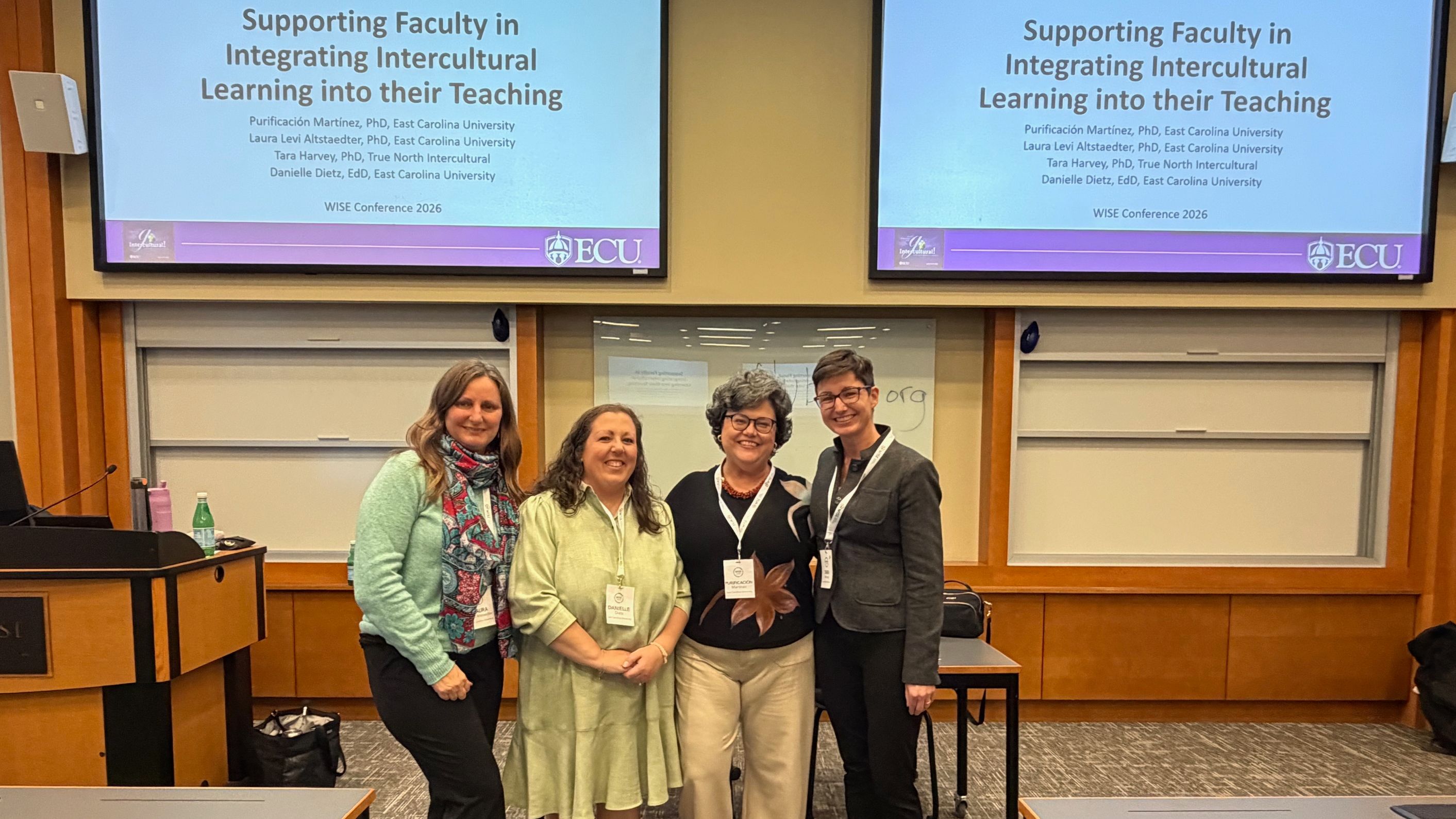
Over the past few weeks, I had the pleasure of attending and presenting at two conferences. First was the WISE Conference, hosted by Wake Forest University in North Carolina, which focuses on intercultural skills enhancement in higher education. A week later, I was in Tucson, Arizona, for the CCID (Community Colleges for International Development) 50th-Anniversary Conference.
The following are a few of the things I’m reflecting on after attending these conferences:
- I’m reminded of how important it is to build relationships and be in community with people who hold a similar vision and goals during these challenging and polarizing times. Being in community with other educators who are dedicated to learning across cultures gives me hope and reinvigorates my energy for doing this work. Remember, you can’t give from an empty cup.
- This also reminds me how critical it is to build trust and relationships before and during any type of intercultural learning. We must be comfortable and trust one another if we have any hope of trying to empathize with, understand, and bridge our differences.
- I’ve heard some people ask whether we should be focusing so much on “global career readiness,” wondering if emphasizing the business case for intercultural learning overlooks other important benefits. While I agree that “global career readiness” is not the only reason to invest in intercultural and global learning, I also recognize it’s language and reasoning that might be more palatable and developmentally-appropriate for those we most need to get buy-in from during these polarizing times. This is language that can help us meet the moment, bridging to those who might otherwise feel resistant or indifferent toward diversity initiatives. Bringing in industry leaders to attest to the skills needed for the 21st century and beyond can help.
- While many of us are facing challenges in our work these days, there are also still moments of great joy. All moments are fleeting, so be sure to be fully present and celebrate the joy! (Thank you to Tammy Gibbs for this important reminder!)
- I’ve been thinking a lot about access—the importance of increasing access to higher education broadly, and specifically access to intentional, well-designed and skillfully-facilitated intercultural learning experiences. To ensure all students develop greater intercultural competence, we need to create multiple avenues and opportunities for intercultural learning. Offering a wide variety of opportunities and scaffolding these will help ensure students experience mentored intercultural learning early in their degree programs and have opportunities to later participate in additional, perhaps more challenging learning experiences. Some opportunities may involve going to or engaging with people from different countries, while others should focus on engaging across cultural differences on our campuses and in our communities. The following is a (non-exhaustive) list of various experiences we could offer and intentionally design for intercultural learning:
- Co-curricular programs that involve learning across cultures on our campuses, such as dialogue across difference programs
- Intercultural learning embedded into traditional courses across the disciplines
- Intentional intercultural living and learning communities
- Virtual exchange
- Virtual internships
- COIL (Collaborative Online International Learning) programs
- Semester-long courses with a short-term experience abroad/away built in
- Short-term, faculty-led study abroad/away
- Semester- and year-long study abroad/away experiences
- Internships abroad
- Last, but not least, intercultural learning starts with us, the educators. Being more experienced, mature, or educated does not necessarily equate to being more interculturally competent. And it certainly doesn’t bestow upon us the skills to effectively facilitate learning across differences. Institutions need to invest in building the intercultural capacity of faculty and staff—helping educators develop their own intercultural competence and their capacity to facilitate other’s intercultural learning.
If you’ve considered attending either the WISE or CCID conferences, I highly recommend them! Both offer intimate, welcoming learning spaces. WISE is held at Wake Forest University in North Carolina every February, and the next CCID conference will be in Washington, DC, around this same time next year.
Join the Conversation!
Enjoying the blog? You’re invited to join me and an amazing group of higher education professionals committed to fostering intercultural learning at the next Intercultural Leadership Forum! You'll have a chance to connect with others doing this work and gain new insights as you move toward your intercultural goals.
AUTHOR

