
Intercultural Learning Partnerships & Projects: Summer Highlights
Sep 09, 2026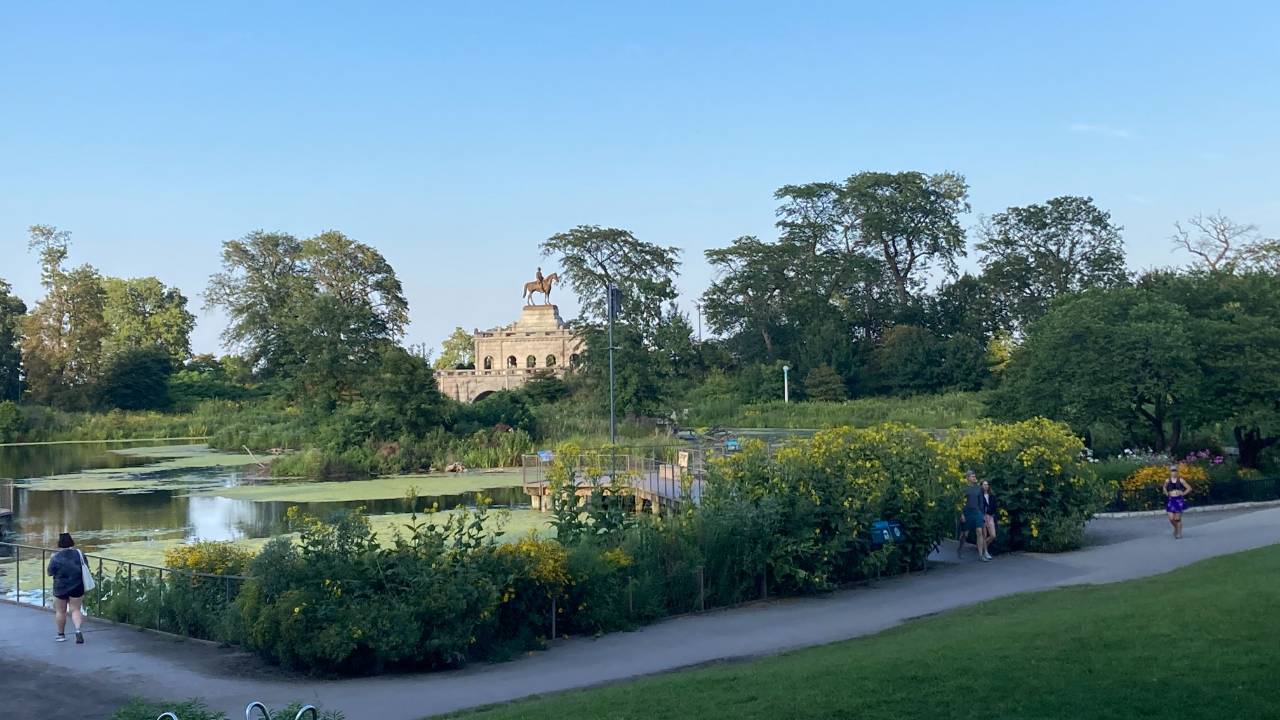
I’m often asked what types of institutions and organizations I work with—and what those partnerships actually look like in practice.
The short answer is that there is no single model. Some projects focus primarily on educators’ own intercultural development, while others also build their capacity to facilitate intercultural learning among students or colleagues. Some are one-time workshops; others are semester-long professional development programs or multi-year partnerships. Some happen fully in person, some fully online, and many blend the two. And while some partnerships are carefully planned from the beginning, others start with a single course, workshop, or conversation and evolve organically as the work unfolds.
To illustrate that more concretely, I’m sharing a snapshot of several partnerships I worked on this past summer. My hope is that these examples will help you imagine what intercultural learning and development could look like at your own institution or organization.
East Carolina University
In May, I wrapped up a semester-long, cohort-based professional development program with an in-person visit to East Carolina University (ECU), a large public R1 school in North Carolina.
For the second year in a row, I partnered with the leaders of ECU’s current Quality Enhancement Program (QEP), which focuses on intercultural learning. The goal of the QEP has been to help faculty members across a range of disciplines integrate intercultural learning into their courses in intentional and developmentally appropriate ways.
Together, we designed the experience in two phases.
First, over the spring semester, a group of selected faculty members participated in an online, facilitated learning experience focused on their own intercultural development. I led that portion of the program, while ECU’s QEP leaders administered the Intercultural Development Inventory (IDI) and facilitated one-on-one IDI debriefs with the participating educators.
The second phase brought the cohort together in person for several days in May to focus on backward design and intercultural pedagogy. Part of that learning experience was facilitated by ECU’s QEP leaders, and part by me. I also met with participants in small groups to consult on their curricular projects and respond to questions as they translated the concepts into practice.
Director of the QEP, Purificación Martínez, said the following about the approach and its impacts:
“The feedback from participants was overwhelmingly positive. Faculty members appreciated the opportunity to engage in their own intercultural development while receiving practical guidance for redesigning their courses. The combination of the IDI process, facilitated learning, and curriculum consultation resulted in projects that will have a lasting impact on student learning across disciplines.”
This is a good example of a partnership that supports a larger institutional initiative: combining individual intercultural development, faculty learning, curriculum design, and campus leadership into one coherent professional development experience.
Dartmouth College
Later in May, I was invited to Dartmouth College—an ivy-league school on the east coast—by the Frank J. Guarini Institute for International Education and the John Sloan Dickey Center for International Understanding as a visiting scholar.
While on campus, I facilitated four mini workshops: two for faculty and staff, and two for student groups. The workshops for educators were designed as a two-part series so participants could attend one or both sessions, depending on their schedule and level of interest.
This kind of engagement offers a different model from a semester-long program. Sometimes an institution wants to create a shared learning opportunity, introduce key intercultural concepts, or spark further conversation across campus without launching a more extensive initiative right away. In those cases, short-form workshops can be a useful way to meet faculty, staff, or students where they are and help them take a meaningful next step.
LewerMark
In July, I began a project with a different type of partner—not a college or university, but an organization that serves the international education sector. LewerMark, a division of Lewer Companies, provides insurance services to international students and educational institutions, and because of that work, the organization recognized the value of investing in staff members’ intercultural competence.
I spent a week at Lewer’s headquarters outside Kansas City, facilitating workshops with employees across the organization, including associates, managers, and members of the executive leadership team. The workshops focused on helping employees better navigate cultural differences with both internal colleagues and external constituents.
Managers and leaders also completed the Intercultural Development Inventory beforehand. During the in-person sessions, we debriefed group results by team, creating space for participants to reflect on how intercultural dynamics show up in their day-to-day work. Over the following month, managers and leaders participated in one-on-one debriefs of their individual results and received customized Intercultural Development Plans to support their continued growth.
Following the engagement, CEO Nik Lewer highlighted some of the ways participants are applying their learning internally as well as externally:
“Tara’s training strengthened the respect our team already has for the students and people we serve every day. It reinforced the belief that every interaction is an opportunity to make the person on the other end of the line feel valued. We were challenged to pause, ask questions, and seek to understand the person or situation before coming to a conclusion. From an internal perspective, associates across the company have shared a better understanding of their colleagues, recognizing differences in our communication styles and values. That awareness is critical as we build collaborative teams focused on keeping Lewer a leader in the field.”
This project illustrates that intercultural learning is not only relevant to colleges and universities. Organizations that work in international education—or with culturally diverse clients, colleagues, students, or partners—also benefit from building shared language, self-awareness, and practical strategies for navigating cultural differences.
DePaul University
The work I’ve been doing with DePaul University this summer is a good example of how a focused professional development opportunity can grow organically into a broader capacity-building effort.
DePaul is a large private Catholic university in Chicago. I was contacted by someone from the Global Engagement team at the beginning of the summer because they had professional development funds to use before the end of the fiscal year. Their initial goal was to have a group of staff members participate in our online course, Navigating Cultural Differences, and debrief the experience together along the way.
In that course, participants learned that intercultural competence is developmental. They were also introduced to the Intercultural Development Inventory (IDI), an assessment tool that helps individuals and groups better understand where they are in their intercultural development journey. As the team learned more, they decided they wanted to take the IDI themselves and extend the invitation to the rest of the division.
We partnered again to administer the IDI to the full Global Engagement staff. At their August staff retreat, I facilitated a group debrief to help the team understand their IDI Profile Report in the context of their work. As we head into fall, team members are now participating in one-on-one debriefs with me to explore how their individual IDI results can help them better understand their strengths, challenges, and developmental opportunities when navigating cultural differences. They will then have the opportunity to continue their development independently using customized Intercultural Development Plans.
Gretchen Frickx, Senior Director for International Student Success and Global Partnerships Management, says she appreciated going through the online course, Navigating Cultural Differences, with her colleagues:
“As educators and staff, we seek the ‘a-ha moment’ with our students. It was so gratifying to share these moments with our staff as we worked through the modules and applied the lessons to our approaches to support international students. Though the modules require individual reflection, the application of the content to our work helped make it real so we could adapt our practices to ensure we do a better job in meeting our students where they are. We are excited to complete the IDI cycle and are working to include intercultural communication practice into our staff development framework.”
This partnership shows that a project does not have to begin as a large-scale initiative in order to be impactful. Sometimes the best starting point is a course, a workshop, or a timely professional development opportunity—and from there, the work can evolve as participants identify what they need next.
Summary
These projects offer just a snapshot of the work I was engaged in this summer, but together they illustrate the variety of ways institutions and organizations can partner with True North Intercultural to develop intercultural capacity.
In some cases, the goal is to support participants’ own intercultural growth. In others, the goal is also to help faculty, staff, or leaders become more effective facilitators of intercultural learning for the people they teach, advise, supervise, or support. The format can vary widely, too: a single workshop, an online course, a semester-long cohort experience, a retreat, individual IDI debriefs, or a multi-year partnership that combines several of these elements over time.
What these projects have in common is that none of them followed a one-size-fits-all model. Each was designed around the client’s goals, context, timeline, audiences, and capacity. Some were mapped out in detail from the beginning, while others grew organically as participants identified what they needed next. That kind of customization is central to how I work.
So whether you’ve been charged with an institution-wide mandate to increase intercultural competence on your campus, want to strengthen your team’s ability to navigate cultural differences, hope to equip faculty or staff to facilitate others’ intercultural learning, or simply have professional development funds you want to put to good use, I’d be happy to strategize with you.
Click here to schedule a free strategy call, and we can explore what kind of partnership would make sense for your institution or organization.
Join the Conversation!
Enjoying the blog? You’re invited to join me and an amazing group of higher education professionals committed to fostering intercultural learning at the next Intercultural Leadership Forum! You'll have a chance to connect with others doing this work and gain new insights as you move toward your intercultural goals.
AUTHOR

